Tuckpointing & Repointing Services
We restore deteriorating mortar joints to protect your brick work from water damage and extend its life for decades.
What is Tuckpointing and Repointing?
Many people use these terms interchangeably, but they are actually different techniques. Both involve repairing the mortar joints between bricks, but they serve different purposes and use different methods.
Repointing Explained
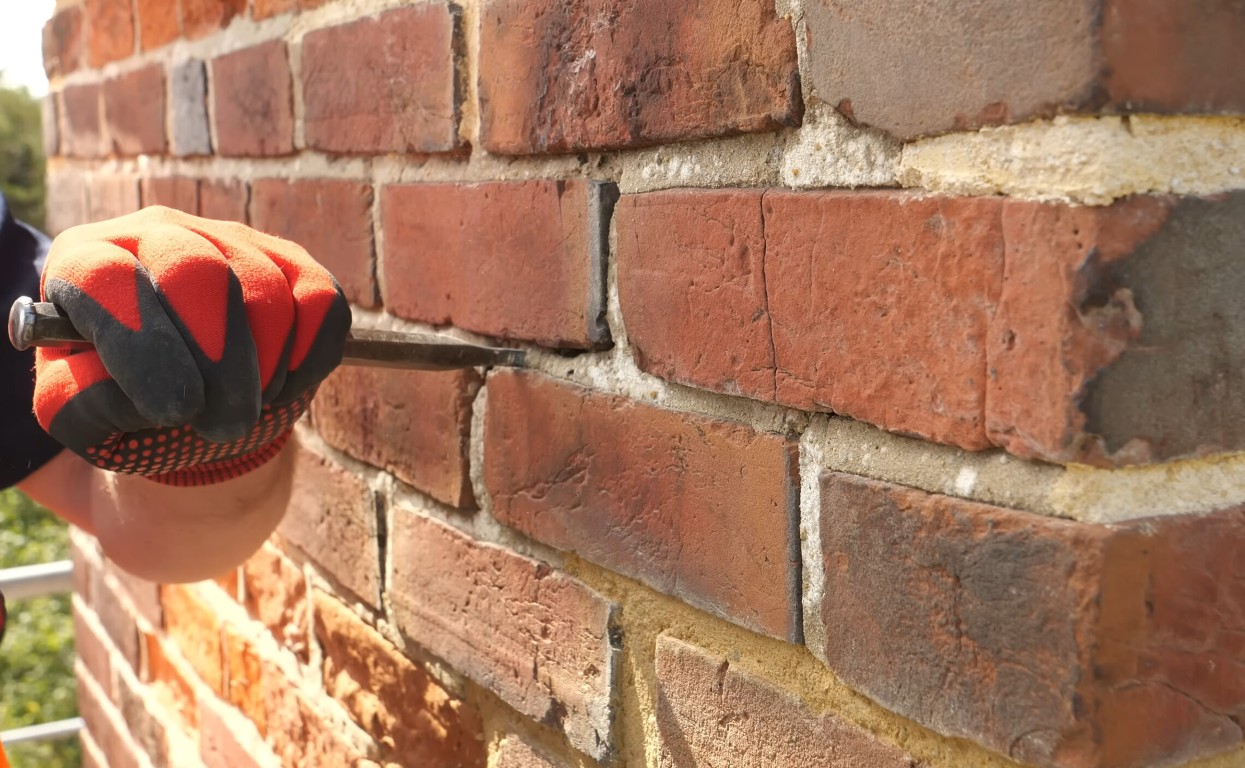
Repointing is the process of removing damaged or deteriorated mortar from the joints between bricks and replacing it with fresh mortar. This is the most common type of mortar repair and what most people need when they talk about fixing their brick work. The goal is to restore the structural integrity of the wall and prevent water from getting behind the bricks.
Over time, weather, moisture, and temperature changes break down mortar faster than brick. You will notice crumbling mortar, gaps in the joints, or mortar that crumbles when you touch it. Repointing fixes these problems before they lead to bigger issues like water damage, mold, or structural failure.
Tuckpointing Explained
Tuckpointing is a specialized technique that creates the illusion of fine, precise joints. First, we repoint the joints with mortar that matches the brick color. Then we apply a thin line of contrasting mortar (usually white or light colored) down the center of each joint. This makes the joints look extremely narrow and uniform, giving the brick work a crisp, high-end appearance.
Tuckpointing was originally developed in England to make cheaper brick look like expensive rubbed brick with fine joints. Today, it is mainly used for restoration of historic buildings or for homeowners who want that classic, refined look. At AGM Augusta Masonry, we have extensive experience with both techniques and can advise you on which is right for your project.
Why Mortar Repair Cannot Wait
Mortar is the glue that holds your brick structure together. While bricks can last for centuries, mortar typically needs attention every 25 to 50 years depending on the quality of the original installation, the type of mortar used, and exposure to the elements. When mortar starts to fail, the problems snowball quickly.
- Water intrusion: Damaged mortar joints let water seep behind your brick facade. This moisture causes mold, damages insulation, rots wood framing, and can even compromise your foundation.
- Freeze-thaw damage: In Augusta, GA we get occasional freezing temperatures. Water that gets into your walls freezes and expands, cracking bricks and pushing mortar out further.
- Structural instability: As more mortar deteriorates, bricks can shift or become loose. What starts as a cosmetic issue can become a safety hazard.
- Reduced property value: Visible mortar damage hurts your curb appeal and makes potential buyers question the overall condition of your home.
- Higher repair costs later: Repointing costs a fraction of what you will pay if you wait until water damage destroys framing, insulation, or creates mold problems.
The best time to repoint is when you first notice deterioration. Catching it early means less damage to repair and lower overall costs. We can assess your mortar joints and tell you honestly whether you need immediate attention or if you can wait a year or two.
Our Professional Repointing Process
Step 1: Assessment and Mortar Analysis
We start by examining your brick work to determine the extent of mortar damage and identify what caused the deterioration. For historic buildings or older homes, we analyze the existing mortar to understand its composition. This helps us create a new mortar mix that matches the strength, flexibility, and appearance of the original.
Step 2: Careful Mortar Removal
We carefully grind out the old mortar to the proper depth, usually about three-quarters of an inch to one inch. This is skilled work that requires patience and the right tools. Go too shallow and the new mortar will not bond properly. Go too deep or use too much force and you risk damaging the bricks. Our experienced masons know exactly how to remove old mortar without harming your brick work.
Step 3: Proper Mortar Mixing and Application
We mix fresh mortar to match your existing joints in both color and texture. The new mortar must have the right consistency and be applied in layers if the joints are deep. Proper application techniques ensure good adhesion and prevent future problems. We pack the mortar firmly into the joints and tool it to match the profile of your existing work.
Step 4: Curing and Protection
Fresh mortar needs time to cure properly. We protect the work from rain, extreme heat, and freezing temperatures during the curing period. Rushing this step leads to weak joints that will fail prematurely. We also clean the brick faces to remove any mortar residue, leaving you with a clean, professional result.
Quality repointing should last 50 years or more when done correctly. That is why we take the time to do it right. Our brick repair services follow the same careful approach, ensuring repairs that stand the test of time.
Frequently Asked Questions
Get Your Free Mortar Assessment
Do not let deteriorating mortar damage your home. Call us at (762) 320-1398 for a professional assessment and honest estimate.
Request Your Free Estimate